
ATS 01-008 · Ministry of Environmental Protection authorization
Noise measurement
Accredited noise measurement in Belgrade and across Serbia: environmental noise, noise in apartments and residential buildings, noise from venues, HVAC units and industry, and workplace noise. We measure to ISO 1996-1 and 1996-2:2019 and issue a noise measurement report as an authorized organization.
- ATS 01-008accredited lab
- ISO/IEC 17025:2017
- since 2001accredited
- ANoise source (HVAC unit, venue)
- BSound level meter at the reference point
- CEquivalent level LAeq per period
- DLevel time history and limit
- ETest report
- 1Noise source and reference measuring point
- 2LAeq measured for day, evening and night
- 3Analysis against the limit values
- 4Noise measurement report
Types of noise measurement
Noise measurement
Environmental noise
Noise levels to ISO 1996-1 and 1996-2:2019, 20 to 130 dB, within ATS accreditation 01-008, plus a Ministry of Environmental Protection authorization for environmental noise.
Apartments and residential buildings
Measurements in apartments exposed to noise from venues, HVAC and ventilation units, lifts, garages or plant rooms, at the most exposed reference point.
Venues, industry, traffic
First and periodic noise measurements for cafés, restaurants, clubs, plants, cooling and ventilation systems, and traffic noise.
Workplace noise
Workplace noise levels as input to the employer’s risk assessment; method and accreditation coverage confirmed before quoting.
Sound power of sources
Sound power level of machines and equipment to EN ISO 3744 and 3746, 20–130 dB, for noise control design.
Sound insulation
When sound travels through walls, floors or façades, we test sound insulation to EN ISO 16283.
Accreditation and standards
ATS 01-008 scope of accreditation
The tests on this page are covered by the scope of accreditation of our Testing and Measurement Laboratory. Reports carry the accreditation mark; methods and ranges are listed below.
- Accreditation No.
- ATS 01-008
- Standard
- ISO/IEC 17025:2017
- Initial accreditation
- 3 Sep 2001
- Valid until
- 15 Mar 2027
| Subject | Test | Range | Reference document |
|---|---|---|---|
| Environment | Determination of noise levels | 20–130 dB | SRPS ISO 1996-1:2019; SRPS ISO 1996-2:2019 |
| Noise sources | Sound power level of noise sources | 20–130 dB | SRPS EN ISO 3744:2011; SRPS EN ISO 3746:2011 |
| Building materials, elements, structures, buildings and halls | Field measurement of airborne sound insulation of façade elements and façades | 20–80 dB | SRPS EN ISO 16283-3:2017; SRPS EN ISO 717-1:2021 |
| Field measurement of airborne sound insulation between rooms | 20–80 dB | SRPS EN ISO 16283-1:2016/A1:2018; SRPS EN ISO 717-1:2021 | |
| Field measurement of impact sound insulation of floors | 20–80 dB | SRPS EN ISO 16283-2:2021; SRPS EN ISO 717-2:2021 | |
| Reverberation time measurement | 0.1–20 s | SRPS U.J6.057:1982 (withdrawn); SRPS EN ISO 3382-2:2010 |
Environmental noise: Ministry of Environmental Protection, decision No. 003239252 2025 14850 003 005 501 069 of 20 Oct 2025.
Process
How it works
- 01
Brief
We identify the source, the exposed space and the purpose: first measurement, periodic measurement, complaint or inspection.
- 02
Plan and reference point
We choose reference points, periods (day, evening, night) and source operating modes.
- 03
On-site measurement
Calibrated sound level meter, short-term or long-term monitoring, with measurement conditions recorded.
- 04
Analysis
Rating levels, residual noise correction and comparison with the limits for the acoustic zone.
- 05
Noise report
A report from an authorized organization, with noise control recommendations where limits are exceeded.
What you get
Report and results
- Environmental noise report from an authorized organization
- Test report with the ATS 01-008 accreditation mark
- Rating levels for day, evening and night
- Compliance assessment against limit values
- Noise control recommendations
Who needs it
Who we work for
- Hospitality venues
- Industry, warehouses and plants
- Building owners and managers with HVAC and cooling plant
- Residents and homeowners’ associations
- Employers and OHS services
- Designers, inspectors and public bodies
Guide
Noise measurement: regulations, limits and the report
Legal basis
The Law on Environmental Noise Protection (Official Gazette RS 96/2021) governs the field. Environmental noise is measured by an authorized legal entity; methods and report content are set by the 2022 rulebook on noise measurement methods (Official Gazette RS 139/2022).
First and periodic measurement
A legal entity owning or using a noise source must arrange a first measurement before use and a report from an authorized organization, and implement noise control if needed. Periodic measurement is carried out once every three years.
Limits and acoustic zones
Results are compared with day, evening and night limit values, which depend on the acoustic zone set by the local government: stricter in residential areas and around hospitals and schools than in the city centre or industrial areas.
How we measure
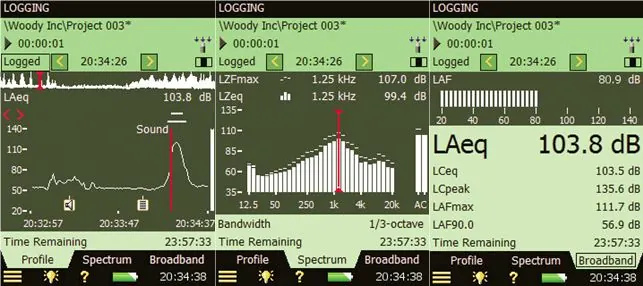
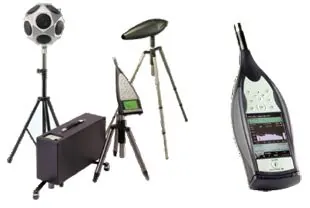
A calibrated sound level meter at the reference point, the space most exposed to noise, with sources, operating modes, weather and residual noise recorded, often during the night period.
Why an accredited laboratory
Our Testing and Measurement Laboratory has been accredited by ATS since 2001 (No. 01-008, ISO/IEC 17025:2017), with a Ministry authorization for environmental noise, and we have designed and installed HVAC systems, a common noise source, since 1990.
FAQ
Frequently asked questions
Who may measure environmental noise in Serbia?
Under the Law on Environmental Noise Protection, environmental noise is measured by an authorized legal entity. We hold Ministry of Environmental Protection decision No. 003239252 2025 14850 003 005 501 069 of 20 October 2025 and ATS accreditation 01-008 for noise levels to ISO 1996-1 and 1996-2:2019.
When is a noise measurement mandatory?
A legal entity that owns or uses a noise source must arrange a first noise measurement on site before putting the source into use, with a report from an authorized organization. The law also requires periodic measurement once every three years.
How long is a noise report valid?
An environmental noise report is valid for three years under the 2022 rulebook (Official Gazette RS 139/2022).
Can you measure noise in my apartment?
Yes, for noise from venues, HVAC units, lifts, garages and similar sources. Noise from neighbours in their apartments is usually handled through house rules and the communal police, so call us to see whether a measurement makes sense.
What is acoustic zoning?
The local government assigns acoustic zones by land use, such as residential areas, the city centre or zones around hospitals and schools. Day, evening and night limits depend on the zone.
How much does it cost?
It depends on the number of points, duration, periods and location. Send us a description of the source and the address for a quote.
Contact
Tell us what needs testing.
Send the building type, location and the test you need, and we will reply with a quote and a date.
