
Authorized organization · IKS licences
Energy passport and energy efficiency.
We issue energy passports and prepare energy efficiency reports for new and existing buildings. With licensed energy efficiency engineers and our own accredited laboratory, the calculation can be backed by on-site measurements.
- Authorizedfor energy passports
- IKSEE licences
- ATS 01-008envelope tests
- ABuilding energy survey
- BHeat losses through the envelope
- CQ H,nd calculation
- DEnergy class
- 1Energy survey of the building
- 2Analysis of envelope heat losses
- 3Calculating annual heating demand
- 4Energy class A+ to G and the passport
What we do
Energy passport & efficiency
Energy passport
Certificate of the building’s energy performance with an energy class from A+ to G, for new and existing buildings and units.
Energy efficiency report
Report as part of the design documents for a building permit, reconstruction or energy retrofit.
Energy survey
On-site survey of the envelope, windows and building services.
Improvement plan
Report on the required thermal improvements with proposed measures and sequence.
Envelope measurements
Thermography, U-value and blower door tests in our accredited laboratory when the calculation needs on-site confirmation.
Authorizations and licences
A passport backed by measurements.
We are authorized to issue energy passports and employ several engineers licensed by the Serbian Chamber of Engineers for energy efficiency. Envelope measurements that can confirm the calculation are done by our accredited laboratory:
| Subject | Test | Range | Reference document |
|---|---|---|---|
| Apartments and buildings | Air permeability testing of apartments | — | SRPS U.J5.100:1984 (withdrawn) |
| Air permeability of buildings – fan pressurization method | 50–39 000 m³/h | SRPS EN ISO 9972:2016 | |
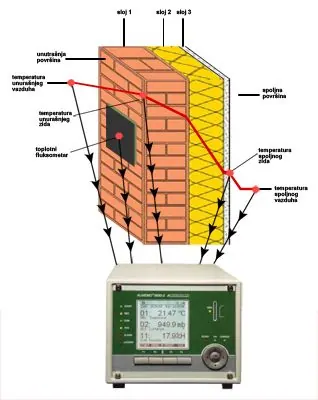
| Building structures | Heat transmission; thermal resistance and thermal transmittance | −25 °C to 20 °C; 0–150 W/m² | SRPS U.J5.062:1984 (withdrawn); SRPS ISO 9869-1:2016 |
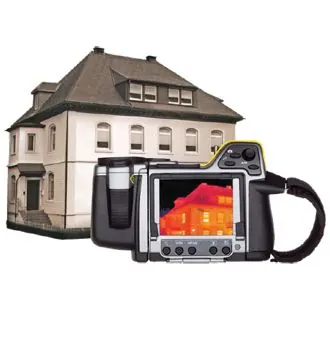
| District heating, thermal power installations, electrical power plants, building thermal insulation | Thermographic testing | −10 °C to 1500 °C | SRPS EN ISO 6781-1:2023; FLIR manufacturer manual |
Process
How it works
- 01
Documents
We collect the design or existing drawings.
- 02
Energy survey
We inspect the building and record the envelope and systems.
- 03
Measurements if needed
Thermography, U-value or blower door where useful.
- 04
Calculation
Annual heating demand and other indicators.
- 05
Class and report
The building is placed in an energy class and the report prepared.
- 06
Energy passport
We issue the passport and the improvement proposal.
What you get
Report and results
- Energy passport (energy performance certificate)
- Energy efficiency report
- Energy survey report
- Thermal improvement report
- Test reports where measurements were made
Who needs it
Who we work for
- Developers applying for an occupancy permit
- Owners selling or renting property
- Designers needing an energy report
- Building managers before a retrofit
- Public and commercial buildings
Guide
Energy passport: what you need to know
What is an energy passport
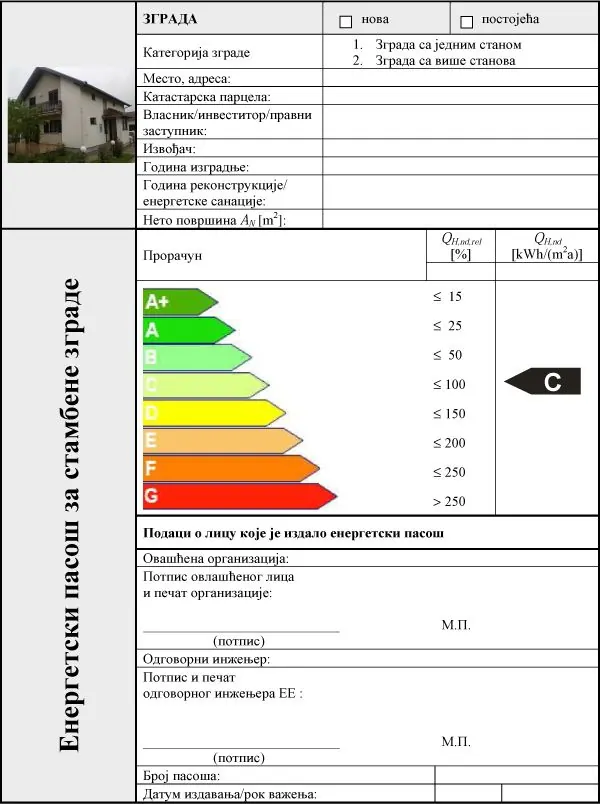
An energy passport (energy performance certificate) states a building’s energy class, based on the calculated annual heating energy need (Q H,nd) per square metre, so buildings can be compared on energy efficiency. It comes with recommended measures for improving the class.
When is it required
For new buildings the energy passport is part of the documentation for the occupancy permit. For existing buildings and their units it is issued when they are sold, leased, reconstructed or energy-retrofitted. Exact obligations depend on the type and use of the building, so send us the details and we will confirm what you need.
Apartments, houses and commercial premises
A passport can be issued for a whole building or for a self-contained unit such as an apartment or office. The procedure is the same for houses, residential blocks, commercial and public buildings: survey, calculation and classification, with the scope depending on size and complexity.
Energy classes A+ to G
Buildings are placed in eight classes, from A+ (best) to G (worst). A new building must reach at least class C. For existing buildings the class shows how far the building is from current requirements and where the largest losses are.
What affects the energy class
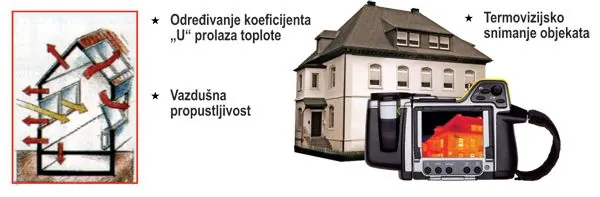
Insulation of walls, roof and floor, window quality and installation, thermal bridges, envelope air permeability and the heating and ventilation systems. For complex buildings we back the calculation with measurements from our accredited scope: thermography, in-situ U-value and the blower door test.
Documents needed
It helps to have the design or existing drawings, floor areas, wall and window types and heating system data. If documents are missing, we collect the data by surveying the building on site.
Energy efficiency report and improvement plan
The energy efficiency report is part of the design documentation and shows that the designed building meets the requirements. For existing buildings we also prepare a thermal improvement report with recommended measures and their order, as a basis for energy retrofit.
Central Register of Energy Passports
Since the November 2025 amendments (Official Gazette RS 102/2025), the authorized organization issues the certificate electronically through the Central Register of Energy Passports. A building or a self-contained unit can have only one energy passport.
What the energy survey includes
The survey covers the thermal envelope, the heating system and its controls, and measurements where data cannot be obtained otherwise. Depending on the building category, the survey report includes thermograms, measured U-values and measured air permeability, all within our laboratory’s accredited scope.
Price
The price depends on floor area and use, envelope and heating complexity, available documentation and any measurements. Send the address, area and use for a quote.
FAQ
Frequently asked questions
What is an energy passport?
It is the certificate of a building’s energy performance. It states the energy class, based on the calculated annual heating demand, and allows buildings to be compared.
When is it required?
For new buildings it is part of the occupancy permit documents. For existing buildings and units it is issued when they are sold, rented, reconstructed or retrofitted. Ask us about your specific case.
What are the energy classes?
Eight classes from A+ (best) to G (worst). A new building must be at least class C.
Can I get one for an apartment?
Yes. A passport can be issued for a self-contained unit such as an apartment or office in an existing building that is sold, rented, reconstructed or retrofitted.
Report vs. passport?
The energy efficiency report is part of the design and shows the designed building meets the requirements. The passport is issued for a completed or existing building and states its class.
How much does it cost?
It depends on floor area, use and whether design documents exist. Send us the basics for a quote.
Contact
Tell us what needs testing.
Send the building type, location and the test you need, and we will reply with a quote and a date.
